

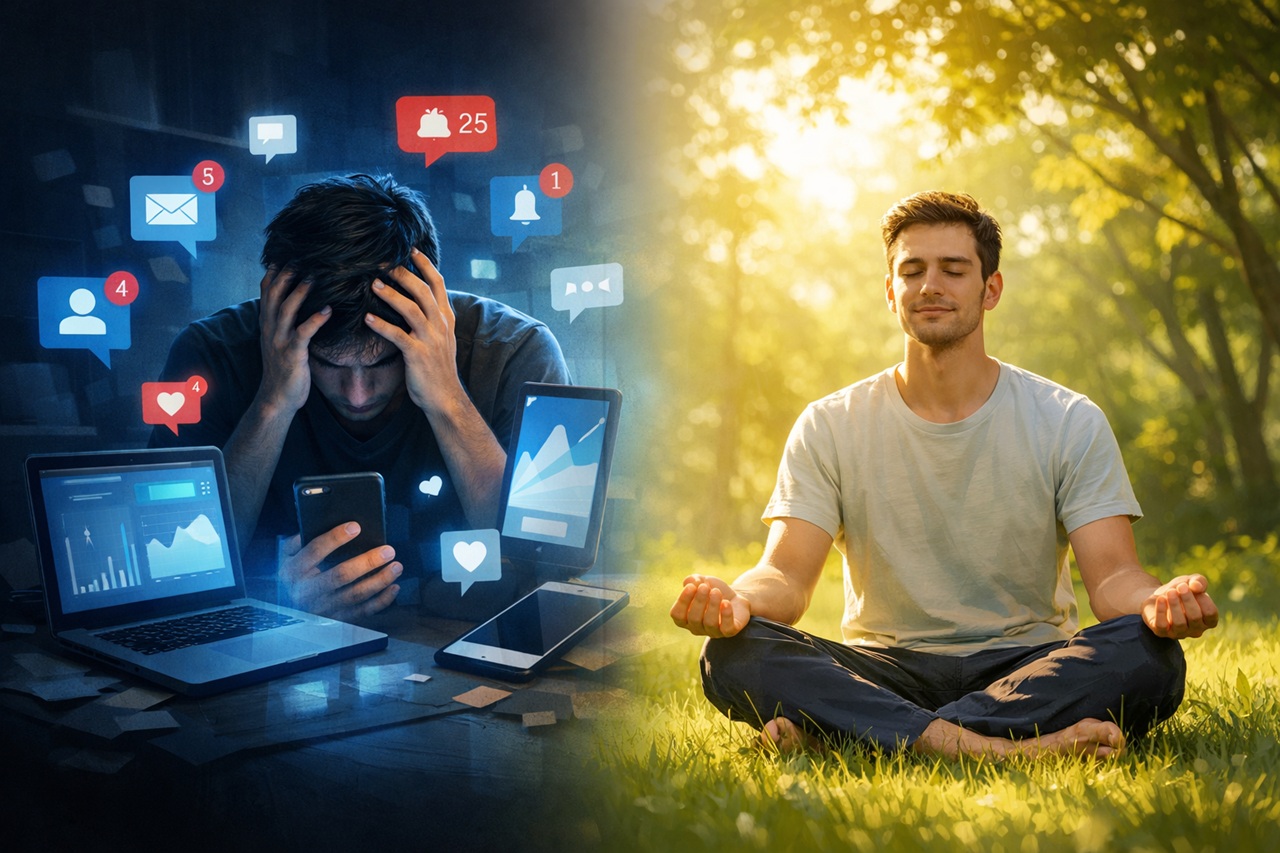
Screens are everywhere. We wake up to phone alarms, scroll social media before getting out of bed, work on laptops all day, and relax with streaming platforms at night. While technology keeps us connected and informed, too much screen time can quietly harm our mental health.
A digital detox, intentionally reducing screen use, can help restore balance, improve emotional well-being, and reconnect us with real life. In this article, we’ll explore how excessive screen time affects mental health, the science behind digital detoxing, and practical ways to reduce screen use without feeling disconnected.
What Is a Digital Detox?
A digital detox means taking a break from digital devices such as smartphones, computers, tablets, and TVs. It doesn’t require quitting technology completely. Instead, it focuses on mindful and intentional use.
A detox can last a few hours, a weekend, or even longer, depending on your needs. The goal is simple: reduce digital overload and create space for mental clarity.
The Link Between Screen Time and Mental Health
Excessive screen use affects the brain in multiple ways. Research shows that long hours spent on digital devices can increase stress, anxiety, depression, and sleep problems.
Screen Time and Anxiety
Constant notifications keep the brain in a state of alert. This makes it harder to relax.
A 2022 study published in Frontiers in Psychiatry found that higher screen time was associated with increased anxiety symptoms in adults and adolescents. The researchers noted that social media comparison and information overload played a major role.
Source: Frontiers in Psychiatry, 2022
Screen Time and Depression
Social media often shows carefully edited versions of life. When people compare themselves to others online, feelings of inadequacy can grow.
According to the American Psychological Association (APA), heavy social media use is linked to increased depressive symptoms, especially among young adults.
Source: American Psychological Association, 2023
Sleep Disruption and Mental Health
Screens emit blue light, which interferes with melatonin production. Melatonin is the hormone responsible for sleep.
The Sleep Foundation reports that using screens before bed can reduce sleep quality and duration. Poor sleep increases the risk of anxiety, depression, and emotional instability.
Source: Sleep Foundation, 2024
How a Digital Detox Improves Mental Health
Reducing screen time offers real mental health benefits. Even small changes can make a noticeable difference.
Improved Mood and Emotional Balance
When you step away from constant digital stimulation, your nervous system gets a break.
A study by the University of Pennsylvania found that limiting social media use to 30 minutes per day significantly reduced symptoms of depression and loneliness within three weeks.
Source: Journal of Social and Clinical Psychology, 2018
Less comparison, fewer notifications, and more real-world interactions help stabilize emotions.
Reduced Stress and Mental Fatigue
Screens demand constant attention. Emails, messages, and news alerts drain mental energy.
Taking breaks from devices lowers cortisol levels, the body’s primary stress hormone. When stress decreases, focus and emotional regulation improve.
People who practice regular digital breaks often report:
- Feeling calmer
- Better concentration
- Less irritability
Better Sleep Quality
A digital detox improves sleep by reducing blue light exposure and mental stimulation.
The National Institutes of Health (NIH) states that improved sleep quality leads to better emotional processing and lower risk of mood disorders.
Source: National Institutes of Health, 2023
Better sleep means:
- More stable mood
- Improved memory
- Higher energy levels
Stronger Real-Life Connections
Digital communication can’t fully replace face-to-face interaction.
Spending less time on screens creates space for meaningful conversations, shared activities, and emotional presence. These connections are essential for mental well-being.
According to Harvard Health Publishing, strong social relationships reduce the risk of depression and anxiety and improve overall life satisfaction.
Source: Harvard Health, 2023
Increased Mindfulness and Self-Awareness
Constant scrolling keeps the mind busy. Silence allows reflection.
A digital detox encourages mindfulness by helping you:
- Notice your thoughts
- Process emotions
- Stay present in the moment
Mindfulness has been proven to reduce stress and improve emotional resilience, according to the World Health Organization (WHO).
Source: World Health Organization, 2022
Signs You May Need a Digital Detox
Not everyone needs a full detox, but certain signs suggest screen time may be affecting your mental health.
Common Warning Signs
- Feeling anxious without your phone
- Checking notifications constantly
- Difficulty focusing
- Poor sleep
- Feeling drained after scrolling
- Comparing yourself to others online
If these symptoms sound familiar, a digital reset may help.
How to Start a Digital Detox (Without Feeling Overwhelmed)
You don’t need to disappear from the internet. Small steps work best.
Set Clear Screen Boundaries
Create rules for device use:
- No phone during meals
- No screens one hour before bed
- Limit social media to specific times
Boundaries reduce mindless scrolling.
Turn Off Non-Essential Notifications
Notifications trigger stress and distraction. Turning off non-essential alerts helps your brain relax and focus on the present.
Replace Screen Time With Offline Activities
A digital detox works best when you replace screen use with healthy alternatives:
- Walking in nature
- Reading physical books
- Journaling
- Exercising
- Spending time with loved ones
These activities naturally boost mood and reduce stress.
Practice “Phone-Free” Moments
Start small:
- Phone-free mornings
- Screen-free Sundays
- No phone during conversations
These moments build awareness and control.
Use Technology Mindfully
Ironically, technology can help reduce screen time. Use:
- Screen time tracking apps
- App limits
- Focus modes
Mindful use matters more than total avoidance.
Digital Detox and Long-Term Mental Health
A digital detox isn’t a one-time fix. It’s a habit.
Consistent breaks from screens help maintain emotional balance, prevent burnout, and support long-term mental health. Over time, people often notice improved self-esteem, reduced anxiety, and stronger relationships.
Final Thoughts
Technology is not the enemy. Overuse is.
A digital detox offers a simple yet powerful way to protect mental health in a screen-saturated world. By reducing screen time, improving sleep, lowering stress, and reconnecting with real life, you give your mind the rest it deserves.
You don’t need perfection. Start with awareness, make small changes, and listen to how your mind and body respond. Your mental health will thank you.
References
- American Psychological Association (2023)
- Frontiers in Psychiatry (2022)
- Journal of Social and Clinical Psychology (2018)
- Sleep Foundation (2024)
- National Institutes of Health (2023)
- Harvard Health Publishing (2023)
- World Health Organization (2022)