

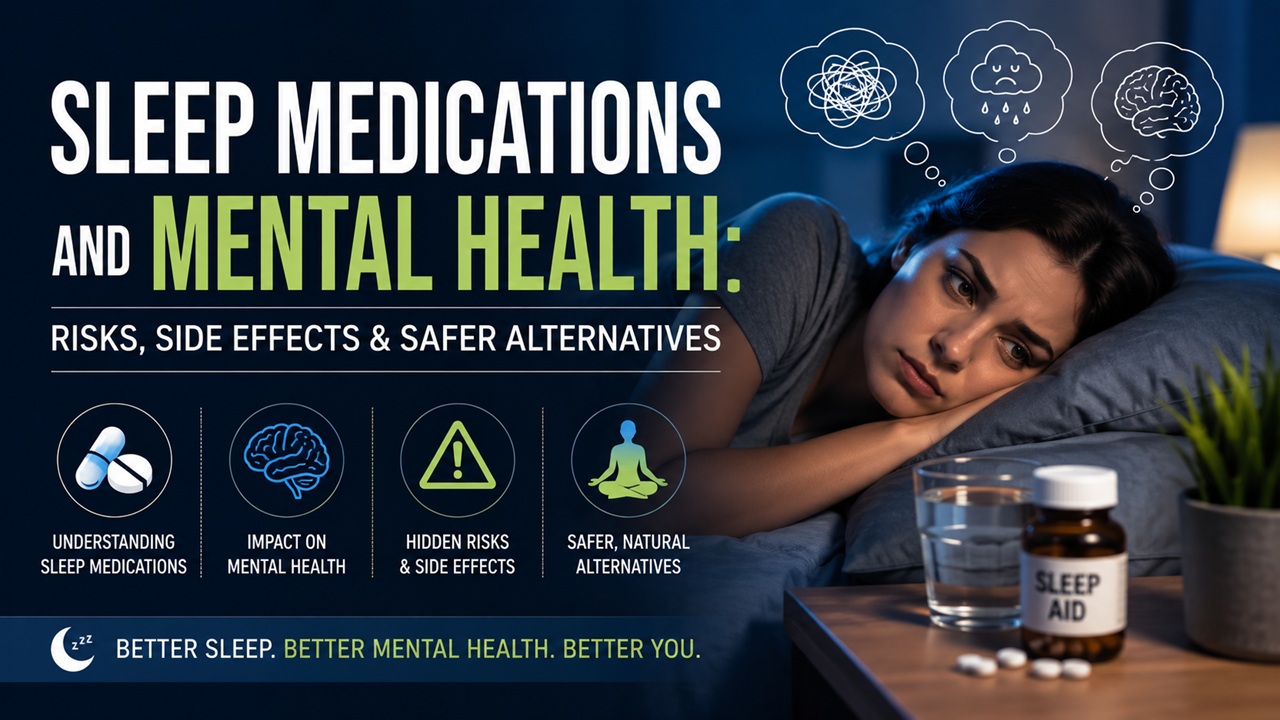
Why You’re Not Sleeping — And Why It Matters
You toss and turn, watching the ceiling fan spin slowly in the darkness. It’s 2:47 AM. The glow of your phone screen feels harsher than usual as you check the time again, already knowing what it says. Another sleepless night.
If this sounds familiar, you’re not alone. Millions of people across the world struggle with chronic sleep problems, and for many, sleep medications seem like the quickest and most reliable solution.
But before you depend on a pill to fall asleep, there’s something important you need to understand:
Sleep medications don’t just affect your sleep—they can significantly influence your mental health, especially if you’re already dealing with anxiety, stress, or depression.
Sleep is foundational to your wellbeing. When you’re sleep-deprived, it’s not just about feeling tired:
- Your mood becomes unstable
- Your focus declines
- Your stress tolerance drops
- Your physical health weakens
- Your relationships may suffer
It’s no surprise that sleep medications have become one of the most commonly used solutions for insomnia. However, the relationship between these medications and mental health is far more complex than it appears on the surface.
Why Sleep and Mental Health Are Deeply Interconnected
To understand sleep medications, you first need to understand sleep itself.
Your brain doesn’t “switch off” when you sleep. Instead, it enters a highly active and structured state where essential processes take place.
During sleep, your brain:
- Processes emotional experiences from the day
- Regulates neurotransmitters that control mood
- Consolidates memories and learning
- Restores cognitive and psychological balance
One of the most important stages of sleep is REM (Rapid Eye Movement) sleep. This is when emotional processing is most active.
When you don’t get enough quality sleep:
- The brain’s emotional center (amygdala) becomes overactive
- You become more reactive to stress and negative events
- The prefrontal cortex (responsible for decision-making and control) becomes less effective
This imbalance creates a powerful cycle:
Poor sleep increases emotional distress → Emotional distress further disrupts sleep
For many people, this cycle becomes exhausting and overwhelming. You may find yourself caught between constant fatigue and increasing emotional strain—making sleep feel even more out of reach.
Types of Sleep Medications and How They Work
Sleep medications are not a single category. Each type works differently in the brain, and understanding these differences helps you make more informed decisions.
1. Benzodiazepines
Benzodiazepines were once widely prescribed as the primary treatment for insomnia.
They work by enhancing the effect of GABA, a neurotransmitter that slows down brain activity and produces a calming effect.
Common examples include: Temazepam and Triazolam
While effective in the short term, they come with serious risks:
- High potential for physical and psychological dependence
- Tolerance development (requiring higher doses over time)
- Withdrawal symptoms when stopping
- Increased risk of falls and accidents
- Potential worsening of depressive symptoms
Because of these risks, their use is now more limited and carefully monitored.
2. Non-Benzodiazepine Hypnotics (“Z-Drugs”)
Often marketed as safer alternatives, these medications work in a similar way but are more targeted toward sleep.
Examples include: Zolpidem, Eszopiclone, and Zaleplon
They are commonly prescribed because they:
- Act quickly
- Help initiate sleep
However, they are not without concerns:
- Risk of dependence still exists
- Tolerance can develop over time
- Some users experience unusual behaviors like sleepwalking, sleep-eating, or even performing activities without memory of them
- Cognitive impairment and next-day drowsiness
3. Sedating Antidepressants
Certain antidepressants are prescribed for their sedative effects, even in individuals who may not have clinical depression.
One commonly used example is: Trazodone
Why they are prescribed:
- Lower perceived risk of addiction compared to traditional sleep medications
However, they can still cause:
- Daytime drowsiness
- Reduced alertness and focus
- Dizziness or lightheadedness
- A feeling of emotional “flatness” in some individuals
4. Melatonin Receptor Agonists
These medications mimic melatonin, the hormone your body naturally produces to regulate sleep-wake cycles.
Example: Ramelteon
Advantages:
- Non-habit forming
- Minimal risk of dependence
- Generally well tolerated
Limitations:
- May not be effective for severe or chronic insomnia
- Works best for circadian rhythm-related issues
5. Over-the-Counter Sleep Aids
Many people turn to easily available options, often without realizing their limitations.
Common types include antihistamines.
While accessible, they often lead to:
- Next-day grogginess
- Slower reaction time
- Brain fog and reduced mental clarity
- Anticholinergic side effects, which can impact memory and cognition
These are not ideal for long-term use.
The Hidden Risks: What Often Goes Unexplained
In most medical consultations, time is limited. As a result, many important details about sleep medications may not be fully discussed.
1. Impact on Depression and Emotional Health
Some sleep medications suppress REM sleep—the phase critical for emotional processing.
Over time, this can:
- Disrupt emotional regulation
- Contribute to worsening depressive symptoms
- Reduce your ability to process stress effectively
2. Rapid Tolerance Development
Many sleep medications lose effectiveness over time.
What initially works well may:
- Require higher doses
- Lead to frequent medication changes
- Create a psychological reliance on medication for sleep
3. Withdrawal and Rebound Insomnia
Stopping certain medications can trigger rebound insomnia, where sleep becomes even more difficult than before.
This often leads people to feel:
- Dependent on medication
- Unable to sleep naturally
4. Interaction with Other Medications
If you are already taking medications for mental health or other conditions, combining them with sleep aids can:
- Increase sedation
- Impair coordination and concentration
- Affect daily performance and safety
Special Considerations for Co-Occurring Conditions
When sleep problems exist alongside mental health conditions, treatment becomes more complex.
Anxiety Disorders
Sleep medications may provide temporary relief by calming the nervous system. However:
- They may prevent development of long-term coping strategies
- Psychological reliance can develop
Depression
Sedation from sleep medications can sometimes mimic or worsen depressive symptoms, including:
- Low motivation
- Fatigue
- Emotional numbness
This can make it difficult to identify the true cause of symptoms.
History of Substance Use
For individuals in recovery, sleep medications carry additional risks:
- Potential for misuse
- Increased likelihood of relapse
- Triggering of addictive patterns
In such cases, careful medical supervision is essential.
Non-Medication Approaches That Provide Long-Term Results
While medications may offer short-term relief, sustainable sleep improvement comes from addressing underlying causes.
Cognitive Behavioral Therapy for Insomnia (CBT-I)
CBT-I is widely considered the most effective long-term treatment for chronic insomnia.
It focuses on both thoughts and behaviors that interfere with sleep.
Core components include:
- Sleep restriction (aligning time in bed with actual sleep)
- Stimulus control (associating bed only with sleep)
- Cognitive restructuring (changing negative sleep-related thoughts)
- Sleep hygiene education
Unlike medication, its benefits continue even after treatment ends.
Mindfulness and Relaxation Techniques
Practices such as:
- Meditation
- Deep breathing
- Progressive muscle relaxation
help calm the nervous system and reduce hyperarousal, a common cause of insomnia.
Circadian Rhythm and Light Exposure
Your body’s internal clock is strongly influenced by light.
- Morning sunlight helps regulate sleep cycles
- Reducing screen exposure at night supports natural melatonin production
Physical Activity
Regular exercise:
- Improves sleep quality
- Reduces stress and anxiety
However, intense workouts close to bedtime may interfere with sleep.
Lifestyle and Sleep Hygiene
Consistent habits play a major role in sleep quality:
- Maintain a fixed sleep schedule
- Avoid caffeine late in the day
- Create a calm, dark sleeping environment
- Limit screen use before bedtime
Questions to Ask Your Healthcare Provider
Before starting any sleep medication, it’s important to have a clear understanding.
Ask questions like:
- How will this medication affect my mental health?
- What is the long-term plan for discontinuation?
- Are non-medication options available?
- What side effects should I monitor?
- How will we evaluate effectiveness?
Being informed helps you make better decisions for your health.
When Medication May Be Necessary
In some cases, medication may be required. This does not mean failure—it means your condition needs additional support.
If used, it should be done carefully:
- Use the lowest effective dose
- Limit duration where possible
- Combine with behavioral strategies
- Monitor effects closely
- Plan gradual discontinuation
Think of medication as a temporary support tool, not a permanent solution.
Building Sustainable Sleep Health
Long-term improvement comes from addressing the root causes of sleep problems.
Consider:
- Stress levels and coping mechanisms
- Underlying mental health conditions
- Daily habits and routines
- Environmental factors
Improving sleep is a gradual process. Setbacks are normal, but consistency leads to lasting results.
Conclusion
Sleep is not a luxury—it is a fundamental pillar of your mental and physical health.
While sleep medications can provide temporary relief, they are not without risks—especially when mental health is involved.
The goal should not just be to fall asleep quickly, but to:
Build natural, consistent, and restorative sleep without dependence.
With the right combination of awareness, professional guidance, and lifestyle changes, better sleep is absolutely achievable.
Disclaimer
This content is for informational purposes only and should not be considered medical advice. Always consult a qualified healthcare professional before starting or stopping any medication.